


Quick Answer: Most alcohol licenses don’t authorize THC drink sales. Bars and liquor stores typically need separate hemp retail licenses to sell hemp-derived THC beverages legally, though state laws vary significantly. Federal law permits hemp drinks with ≤0.3% Delta-9 THC, but alcohol licensing boards and hemp programs operate under different regulatory frameworks.
The rapid growth of hemp-derived THC beverages has created confusion for alcohol retailers. When the 2018 Farm Bill legalized hemp with less than 0.3% Delta-9 THC, it opened the door for compliant THC drinks – but didn’t clarify how they fit into alcohol retail frameworks.
Bar owners and liquor store operators face a critical question: does their existing liquor license cover these new hemp beverages? In most jurisdictions, the answer is no. Alcohol licensing and hemp retail authorization fall under different regulatory systems, managed by different state agencies. Selling THC drinks without proper hemp licensing can jeopardize alcohol licenses worth thousands in annual revenue.
This guide breaks down the regulatory framework, licensing requirements, and compliance steps for bars and liquor stores interested in stocking THC beverages.
Key Takeaways
- Alcohol licenses and hemp licenses are separate in most states – holding a liquor license doesn’t automatically authorize THC beverage sales.
- Hemp-derived THC drinks containing ≤0.3% Delta-9 THC are federally legal under the 2018 Farm Bill, but state hemp programs determine retail authorization.
- On-premise consumption of THC drinks in bars faces additional restrictions beyond simple retail sales, with many states prohibiting cannabis consumption in licensed alcohol establishments.
- Compliance documentation including batch-level COAs and hemp retail permits are required regardless of existing alcohol licensing.
- Alpha Brands provides compliant hemp-derived products with batch-tested documentation for licensed retailers operating in both alcohol and hemp retail channels.
Federal Legal Framework for THC Drinks
The 2018 Farm Bill federally legalized hemp, defined as cannabis containing no more than 0.3% Delta-9 THC by dry weight. This threshold applies to all hemp products, including beverages. Hemp-derived THC drinks meeting this standard are legal to manufacture, distribute, and sell federally – provided they comply with state laws.
According to Cannabusiness Plans market research, the U.S. hemp beverage market reached an estimated $127 million in annual sales in 2023.
This figure reflects rapid expansion driven by regulatory support and consumer adoption of hemp-derived CBD drinks, with projections estimating growth to $1.57 billion by 2028 at a 76.5% CAGR.
Read this state-by-state THC drink legality guide for more information.
State Alcohol Licensing vs Hemp Retail Licensing
Most states operate separate licensing systems for alcohol and hemp retail. A liquor license authorizes the sale of alcoholic beverages regulated by state Alcoholic Beverage Control (ABC) boards. A hemp retail license authorizes the sale of hemp-derived products regulated by state agriculture departments or hemp authorities.
Key distinction: Holding one license type doesn’t grant authorization for the other category. A bar with full liquor service needs additional hemp retail authorization to legally sell THC drinks in most states.
License Type Comparison
| License Type | Regulatory Authority | Products Authorized | Typical Annual Cost | Required for THC Drinks? |
| On-Premise Liquor License | State ABC Board | Alcoholic beverages for consumption on-site | $1,000-$10,000+ | ❌ No (separate hemp license needed) |
| Off-Premise Liquor License | State ABC Board | Alcoholic beverages for off-site consumption | $500-$5,000+ | ❌ No (separate hemp license needed) |
| Hemp Retail License | State Ag Dept/Hemp Authority | Hemp-derived products including THC drinks | $100-$2,500 | ✅ Yes (required in most states) |
| General Retail License | Local/State Business Licensing | General merchandise | $50-$500 | ⚠️ Insufficient alone (hemp license also needed) |
On-Premise vs Off-Premise Considerations
Off-premise retail (liquor stores) typically faces fewer restrictions. If a liquor store obtains a hemp retail license, stocking pre-packaged THC drinks for customer purchase becomes legal in permissive states. The product leaves the premises unopened, similar to beer or wine sales.
On-premise consumption (bars, restaurants) encounters additional hurdles:
- Many states prohibit cannabis consumption in licensed alcohol establishments, even if the THC drink contains only hemp-derived cannabinoids
- Some jurisdictions ban “mixing” alcohol and cannabis products in the same venue
- Local ordinances may restrict on-premise THC beverage service regardless of state law
- Insurance considerations and liability concerns affect bars more than retail stores
A bar may legally sell sealed THC drinks for off-premise consumption with proper licensing but cannot serve them for consumption alongside alcoholic beverages in many jurisdictions.
Featured THC Drinks
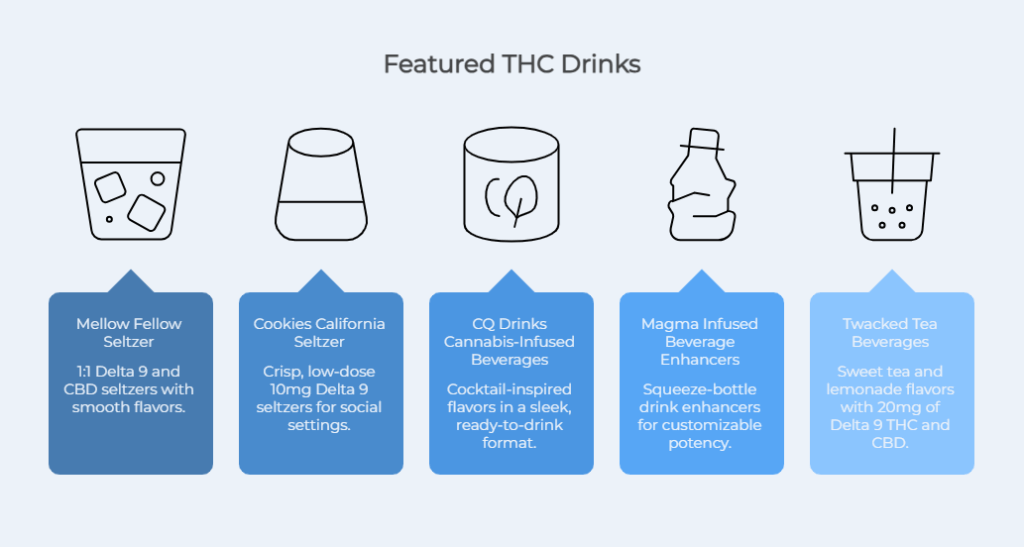
These standout Delta 9 beverages combine consistent dosing, strong shelf appeal, and reliable consumer demand, making them smart additions for retailers building out a modern cannabis drink selection.
Mellow Fellow Seltzer Beverages (20mg Delta 9 + CBD)
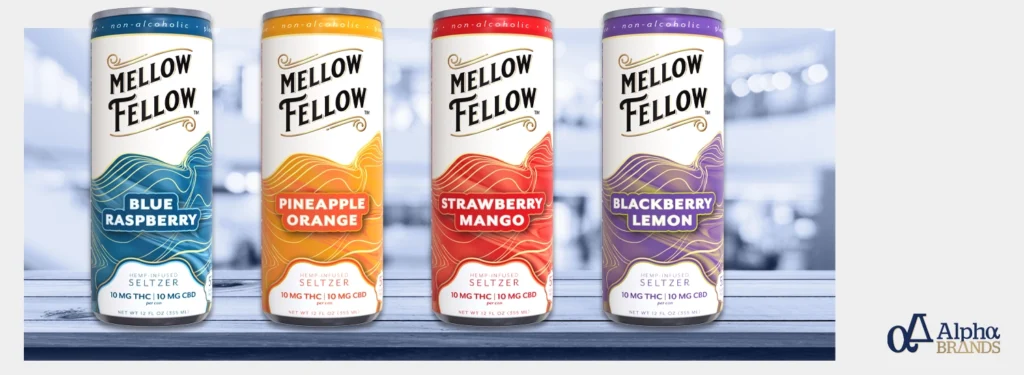
Mellow Fellow’s 1:1 Delta 9 and CBD seltzers deliver fast-acting, balanced effects with smooth, modern flavors like Blackberry Lemon and Blue Raspberry. The nano-emulsified formula is consistent and beginner-friendly while still satisfying experienced users. Alpha Brands carries the full flavor lineup for wholesale buyers.
Cookies California Seltzer (10mg Delta 9)
Cookies brings its iconic branding to cannabis beverages with crisp, low-dose 10mg Delta 9 seltzers designed for social settings and repeat consumption. Flavors like Peach Iced Tea and Raspberry Lemonade appeal to mainstream customers seeking familiarity and quality. Available through Alpha Brands for retail distribution.
CQ Drinks Cannabis-Infused Beverages (10mg Delta 9)
CQ Drinks offers cocktail-inspired flavors like Old Fashioned Lemonade and Watermelon Lemonade in a sleek, ready-to-drink format. Each bottle delivers a clean 10mg dose with reliable onset and strong shelf appeal. Alpha Brands stocks CQ Drinks for retailers targeting premium beverage buyers.
Magma Infused Beverage Enhancers (200mg Delta 9)
Magma’s squeeze-bottle drink enhancers let customers customize potency by adding Delta 9 to any beverage. Each bottle contains 200mg total THC, making it a high-value option for experienced consumers who want flexible dosing. Alpha Brands carries multiple flavors for wholesale ordering.
Twacked Tea Beverages (20mg Delta 9 + CBD)
Twacked Tea blends sweet tea and lemonade flavors with 20mg of Delta 9 THC and CBD for a bold, balanced functional drink. The familiar profile helps convert first-time buyers while still delivering strong effects. Alpha Brands supplies Twacked Tea in multi-pack formats.
State-by-State Legal Status Overview
Sovos ShipCompliant’s July 2025 research confirms varied state approaches to hemp-derived THC beverages in alcohol retail settings. As of February 14, 2025, 24 states explicitly allow retail sales, 10 states impose restrictive potency limits (e.g., 1 mg THC per serving), 5 states have no clear rules, and 11 states prohibit retail sales entirely.
State regulations evolve rapidly; retailers must verify via official sources as of January 2026. Federal FDA/TTB restrictions limit interstate sales, with GRAS hemp ingredients (e.g., seeds) permitted but intoxicating THC beverages facing bans in alcohol-licensed venues nationwide.
States with Permissive Hemp Beverage Frameworks
- Minnesota: Allows hemp-derived edibles/beverages up to 5 mg THC per serving/50 mg per package for 21+, but explicitly excludes bars and liquor stores.
- Wisconsin: THC drinks (2.5–50+ mg per can) sell widely in convenience stores, bars, groceries, and liquor stores despite recreational marijuana illegality.
- Texas: Legal under hemp program registration separate from alcohol licensing; liquor stores permitted with authorization, but bars prohibit on-premise.
- Florida: HB 7027 (2025) sets 5 mg THC per 6 fl oz/10 mg max per container, with internet sales rules.
- Tennessee: Hemp licensing shifted to Alcoholic Beverage Commission effective January 1, 2026, unifying alcohol/hemp oversight.
States with Restrictive or Conditional Frameworks
- California: 2024 emergency regs ban detectable THC in hemp food/beverages; ABC prohibits sales/consumption in licensed alcohol spots.
- New York: Limits 1 mg THC/serving, 10 mg/package, 15:1 non-intoxicating:THC ratio – eliminating most beverages.
- Connecticut: 1 mg THC/serving limit renders typical formulations nonviable.
- Illinois: Permits under food regs; HB 1766 bans “happy hours” for hemp beverages.
- Oregon: OLCC bans cannabinoid-alcohol mixes without TTB approval (none granted); strict THC/testing limits apply.
- Rhode Island: SB 984 mandates on-premise-only sales by licensees, 5 mg/serving max, two servings max – no online.
- Arizona: SB 1556 bans powder/tincture hemp beverages for mixing.
- Alabama: 2025 ABC licensing caps 10 mg THC/serving, 40 mg/package for 21+; bans smokables/vapes.
States with Outright Bans
- Idaho: Requires 0.0% detectable THC; intoxicating products prohibited.
- Alaska: Bars Delta-8/10 and semi-synthetics.
- Hawaii: Limits to medical program; no intoxicating hemp-derived retail.
For detailed state-by-state compliance guidance, retailers managing inventory across multiple jurisdictions should reference our compliance guide for wholesale cannabis operations.
Hemp-Derived THC Beverage Legal Status (Selected States)
| State | Status | Retail Rules Summary |
| Minnesota | Permitted | 5 mg per serving, 50 mg per package. Bars and liquor stores excluded. |
| Wisconsin | Permitted | 2.5–50+ mg allowed. Sold in convenience stores, bars, groceries, and liquor stores. |
| Texas | Permitted | Allowed with hemp registration. Liquor stores allowed, bars prohibited. |
| Florida | Permitted | 5 mg per 6 fl oz, 10 mg per container. Online sales regulated. |
| Tennessee | Permitted | Hemp oversight moved to Alcoholic Beverage Commission (2026). |
| California | Restricted | Detectable THC banned in hemp beverages. Alcohol venues prohibited. |
| New York | Restricted | 1 mg per serving, 10 mg per package, 15:1 ratio requirement. |
| Connecticut | Restricted | 1 mg per serving limit. |
| Illinois | Restricted | Allowed as food products. “Happy hour” promotions banned. |
| Oregon | Restricted | No cannabinoid + alcohol mixing. Strict THC limits. |
| Rhode Island | Restricted | On-premise only. 5 mg per serving, max 2 servings. |
| Arizona | Restricted | Powdered and tincture beverages banned. |
| Alabama | Restricted | 10 mg per serving, 40 mg per package. Smokables and vapes banned. |
| Idaho | Banned | 0.0% detectable THC required. |
| Alaska | Banned | Delta-8, Delta-10, semi-synthetics banned. |
| Hawaii | Banned | Limited to medical program only. |
Compliance Requirements for THC Drink Sales
Regardless of license type, retailers selling hemp-derived THC drinks must meet specific compliance standards. For bars and liquor stores entering the hemp beverage category, understanding documentation requirements prevents costly compliance failures.
Documentation Requirements
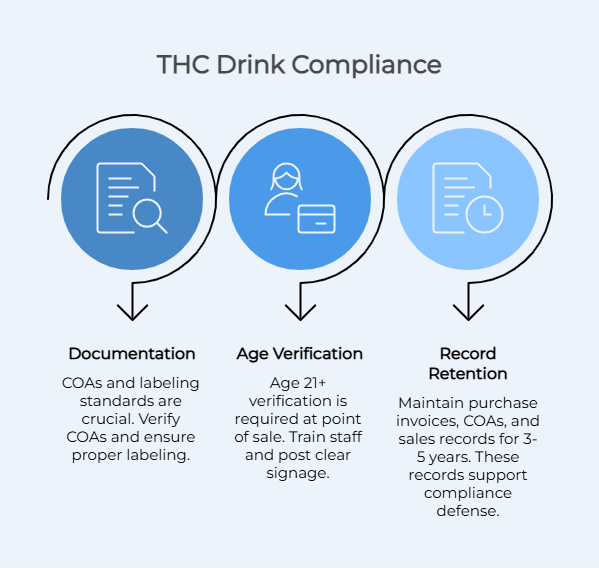
Certificates of Analysis (COAs): Every batch of THC drinks must have lab testing results showing:
- Delta-9 THC content at or below 0.3% by dry weight
- Batch/lot number matching product packaging
- Accredited lab certification (ISO 17025 preferred)
- Contaminant screening for pesticides, heavy metals, and microbials
- Test date within reasonable timeframe of production
Retailers should verify COAs through lab websites or QR codes on products. During compliance inspections, authorities will request these documents immediately. According to Mellow Fellow’s THC drink testing standards, reputable brands provide batch-specific COAs accessible via QR codes, with ISO 17025-accredited lab results for every product.
Labeling Standards: THC drinks must display:
- Total THC content per serving and per container
- Batch number for traceability
- “Not for sale to minors” or age 21+ language
- Manufacturer contact information
- Warning statements (varies by state – may include pregnancy warnings, psychoactive effect disclosures)
Age Verification Requirements
All hemp-derived THC beverages require age 21+ verification at point of sale in most jurisdictions. Retailers should:
- Implement ID scanning or manual verification
- Train staff on verification protocols
- Post clear age restriction signage
- Maintain transaction records documenting age verification
Selling to minors can result in fines, license suspension, and criminal liability.
Record Retention
Maintain purchase invoices, COAs, and sales records for 3-5 years (varies by state). These records support compliance defense during audits and demonstrate good-faith compliance efforts.
Alternative Hemp Product Categories for Alcohol Retailers

While THC drinks face complex licensing requirements, alcohol retailers may find other hemp categories more straightforward to add depending on state regulations.
Hemp-derived edibles like gummies or chocolates often face similar licensing requirements but may have clearer regulatory pathways in some states. Alpha’s edibles collection includes batch-tested options with complete compliance documentation. For retailers already navigating hemp retail licensing, edibles offer higher margins and longer shelf life than beverages.
THCa flower and pre-rolls represent fast-moving inventory for smoke shops but may face additional scrutiny in traditional alcohol retail locations. For guidance on THCa product sourcing and compliance, our guide to placing products in retail stores addresses category-specific considerations for bars and convenience stores.
Kratom products are legal in most states and typically require less specialized licensing than THC beverages. For bars and retailers looking to add wellness categories without hemp licensing complexity, kratom tablets and extracts offer margin-positive alternatives with established consumer demand. Kratom sales don’t typically require alcohol or hemp-specific licensing in permissive states.
Nicotine-free hemp options: Some retailers opt for CBD beverages or non-intoxicating hemp drinks that avoid THC licensing complications entirely while still offering hemp category access. These products face fewer regulatory barriers and may be viable in states with restrictive THC policies.
Each category has distinct regulatory requirements. For retailers considering which hemp categories align with existing alcohol licensing frameworks, explore Alpha’s multi-brand portfolio or connect with our wholesale team for guidance on category selection, compliance requirements, and state-specific authorization needs.
Verification Steps for Bars and Liquor Stores
Before stocking THC drinks, complete these verification steps:

- Check Your State Hemp Program Requirements
Contact your state’s Department of Agriculture or Hemp Authority. Ask specifically:
- Do I need a hemp retail license separate from my liquor license?
- Can alcohol-licensed establishments sell hemp beverages?
- Are there restrictions on on-premise consumption vs off-premise sales?
- What compliance documentation is required?
- Review Local Ordinances
Some cities and counties impose restrictions beyond state law. Contact your local business licensing office to confirm hemp retail is permitted in your jurisdiction and location.
- Verify Alcohol Licensing Board Policies
Contact your state’s ABC board directly. Ask:
- Does selling hemp products affect my alcohol license status?
- Are there prohibitions on “co-mingling” alcohol and THC products?
- Do I need to notify the ABC board before adding hemp beverages?
- Consult Legal Counsel
Given the complexity and evolving nature of hemp beverage regulations, consultation with an attorney specializing in alcohol or cannabis law is recommended. Legal fees for consultation ($500-$2,000) are minimal compared to license suspension risk.
- Confirm Supplier Compliance Documentation
Before placing orders, verify suppliers provide:
- Batch-specific COAs with Delta-9 THC results
- Lab accreditation documentation
- State-appropriate product labeling
- Written compliance support commitments
- Document Your Compliance Efforts
Keep dated records of:
- Legal research and agency communications
- Supplier compliance verification
- COA reviews and lab contact verification
- Staff training on age verification and compliance protocols
This documentation demonstrates good-faith compliance if questions arise during inspections.
Next Steps for Bars and Liquor Stores
The hemp beverage market offers growth opportunities for alcohol retailers, but only with proper licensing, documentation, and compliance processes in place. Contact Alpha Brands to discuss state-specific hemp beverage compliance, alternative product categories, and wholesale account setup for bars and liquor stores.
Frequently Asked Questions
Can I Sell THC Drinks If I Have a Liquor License?
No. In most states, liquor licenses and hemp retail licenses are separate. Selling hemp-derived THC drinks typically requires a hemp retail permit in addition to your alcohol license. Some states like Minnesota explicitly prohibit alcohol-licensed establishments from selling hemp beverages regardless of additional licensing. Always verify requirements with both your state ABC board and hemp authority before stocking inventory.
Are THC Drinks Regulated Like Alcohol or Like Cannabis?
Hemp-derived THC drinks are regulated as hemp products, not alcohol or marijuana. They fall under state agriculture departments or hemp programs, not Alcoholic Beverage Control boards. This creates separate compliance requirements from traditional alcoholic beverages. The TTB maintains clear separation between alcohol regulation and hemp product oversight.
Can Bars Serve THC Drinks for On-Premise Consumption Alongside Alcoholic Beverages?
Most states prohibit this. Even in permissive hemp states, on-premise consumption of THC beverages in licensed alcohol establishments faces additional restrictions. Many states explicitly ban cannabis consumption in bars and restaurants. Bars may be able to sell sealed THC drinks for off-premise consumption (similar to beer for takeout) but typically cannot serve them alongside alcohol for immediate consumption.
What Happens If I Sell THC Drinks Without Proper Licensing?
Penalties vary by state but typically include:
- Product seizure and inventory holds
- Fines ranging from $1,000-$10,000+ per violation
- Suspension or revocation of existing licenses (including alcohol licenses)
- Potential criminal charges in restrictive states
Non-compliance can jeopardize your alcohol license, making verification of requirements critical before stocking THC beverages. For retailers managing compliance risk, our compliance guide for cannabis wholesale operations addresses penalty mitigation and documentation best practices.
How Do I Verify That THC Drinks Are Actually Compliant?
Request batch-specific COAs showing Delta-9 THC at or below 0.3% by dry weight. Verify the testing lab is ISO 17025 certified by contacting the lab directly or checking their accreditation status. Match batch numbers on COAs to product packaging. If suppliers cannot provide instant COA access or lab verification, consider alternative suppliers. Alpha’s product pages include direct COA access for batch-level verification.
Can I Ship THC Drinks Across State Lines to Customers?
Shipping hemp products across state lines is federally legal, but destination state laws apply. If the destination state restricts hemp beverages or requires specific retail licensing, shipping may violate state law. Many alcohol retailers restrict online THC beverage sales to states with clear legal frameworks to avoid liability. For multi-state operations, consult state-specific hemp regulations before implementing e-commerce.
What’s the Difference Between Hemp-Derived and Marijuana-Derived THC Drinks?
Hemp-derived THC drinks contain ≤0.3% Delta-9 THC and are federally legal under the Farm Bill. Marijuana-derived THC drinks typically contain higher THC levels and are only legal in states with recreational or medical marijuana programs. Bars and liquor stores in marijuana-legal states still need marijuana retail licenses (separate from liquor licenses) to sell marijuana-derived products. Hemp-derived drinks offer a simpler regulatory pathway in most states.
Sources
- Tennessee shifts hemp licensing from agriculture to alcohol commission in 2026
- Introducing the Hemp Legislation Blog
- Frequently Asked Questions About Hemp Beverages: How Federal and State Laws Are Reshaping the THC Drink Market | Vicente LLP
- Are THC Drinks Even Legal? – USA Mobile Drug Testing
- Hemp-Derived Beverages: Legal Compliance State-by-State Guide – Sovos ShipCompliant
- Texas Industrial Hemp Program
- Hemp Beverage Industry Growth Outlook – Whale Pod Shipper
- Farm Bill | USDA
- FDA Regulation of Cannabis and Cannabis-Derived Products, Including Cannabidiol (CBD) | FDA
- Alcohol and Tobacco Tax and Trade Bureau Hemp Policy | TTB: Alcohol and Tobacco Tax and Trade Bureau
Legal Disclaimer
This article provides general information about hemp beverage regulations for educational purposes. It does not constitute legal advice and should not be relied upon as legal counsel for specific licensing or compliance decisions.
Hemp and THC beverage laws change frequently at federal, state, and local levels. Information in this guide reflects current understanding as of January 2025 but may not account for recent legislative changes or enforcement actions in your jurisdiction.
Bars and liquor stores should consult qualified attorneys specializing in alcohol licensing, hemp law, or cannabis regulation before making compliance decisions. Alpha Brands provides compliance documentation and regulatory support but does not offer legal advice.
State and local laws vary significantly. Always verify current regulations with your state’s Alcoholic Beverage Control board, Department of Agriculture, and local licensing authorities before purchasing, stocking, or selling hemp-derived THC beverages.